|
|
Lesson description:
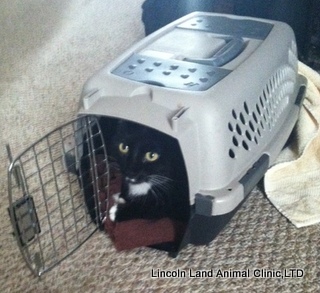
Teach your cat to approach and enter their crate. The technique discussed is passive, meaning your cat makes the choice and should never be forced. The goal is to have the cat realize that good things happen when it is in the crate; this process is called desensitization (becoming more comfortable with the carrier) and counter conditioning (changing the emotional response from fear to comfort). You can download the pdf version here.
 |
Before starting be sure to have the following items:
- Crate- free from odors. If your cat has previously eliminated in the carrier, clean, disinfect and let dry.
- Hard sided crates ideally will have a top that opens as well as the front door.
- Soft-sided crates are also acceptable.
- The crate should be large enough that the cat can enter without hitting the door. The size will be determined by the size of your cat.
- Feliway spray- this is a pheromone spray that helps to decrease anxiety in cats. Please spray the carrier and any bedding at least 30 minutes prior to introducing your cat to the carrier. You can also take a towel that you have rubbed on your cat's face when they are happy and place it in the carrier.
- Bedding- whatever your cat likes. Generally they like soft and fluffy with a rim around the edge to snuggle against.
- Treats and toys. They need to be very high value, this does not necessarily mean high proceed, just a treat or toy that your cat will do anything to get! Canned food, hot dogs, chicken chunks, tuna chunks, and yogurt are a few favored items for many cats. If your cat has health issues, please consult with your veterinarian prior to trying these foods. The cat won't be getting a large volume of these special items. Some cats prefer toys to food; having their favorite toy available is helpful.
|
Training plan:
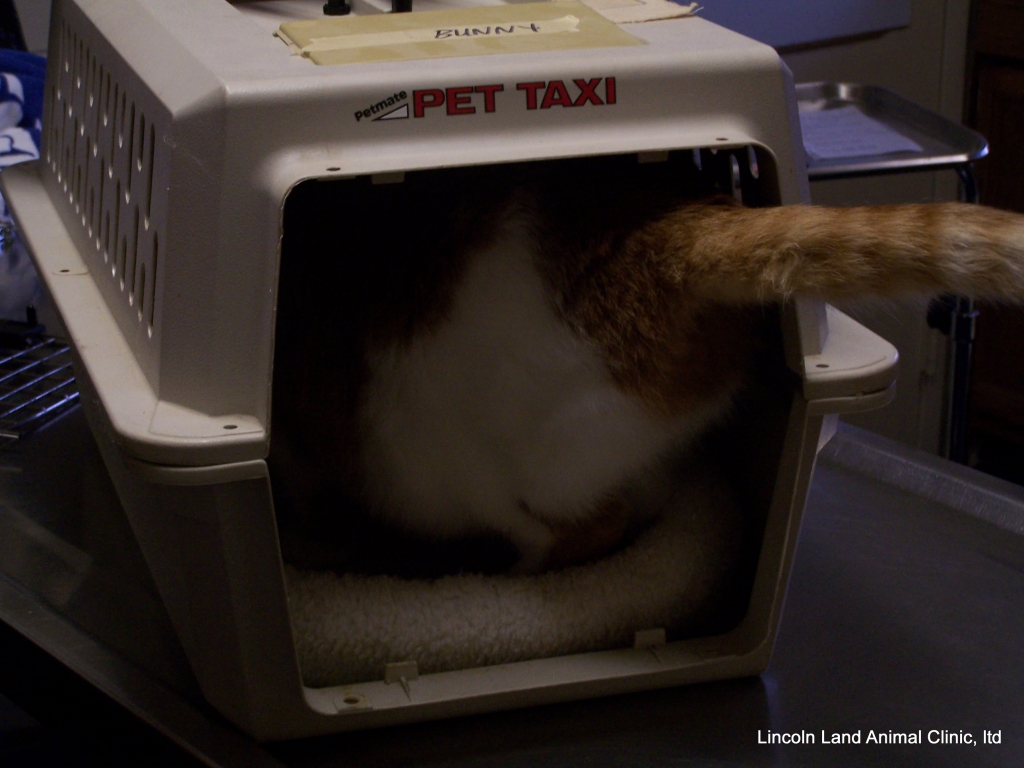
- Place the carrier in your cat's favorite spot to lie.
- Place the comfy bedding along with treats and toys in the carrier.
- Remove the door from the crate. This prevents the cat from accidentally hitting the door and becoming scared while it is exploring.
- Remove lid if your cat is really freaked out by the carrier. Let them get used to just the bottom. It will serve as a bed.
- Let the cat explore the bed. Ideally the cat should "discover" the goodies on his or her own. Once the treats are consumed/or toys removed you can add more.
- If you happen to be in the room when the cat enters the carrier you can say, "good kitty" in a soft reassuring voice.
- If your cat is going in regularly while you are present reinforce the behavior by walking over and dropping a treat in the carrier.
- Replace lid on carrier
- This is only necessary if you had to remove the top in the previous step.
- With the lid on, start over again at the beginning just as you did without the lid. The process generally goes much quicker. The cat determines the pace.
- Replace door on carrier.
- Fasten the door so that it will not bang open or shut.
- Ideally the crate is large enough that your cat can go in and out without hitting the door.
- Allow the cat to come out of the carrier after each session if they choose.
- When your cat is going into the carrier regularly then start to stand closer to the carrier.
- When you can stand next to the carrier and your cat remains relaxed in the carrier, proceed to the next step.
- The cat needs to feel comfortable with you by the carrier.
- As the cat enters, or is in the carrier, toss your cat's favorite high value treats your cat will learn that you, near the carrier is a good thing.
- Your cat will learn that your presence near the carrier is a good thing and predicts their favorite treat is coming.
- Shutting the carrier door
- First, just place your hand on the carrier door, toss treat.
- Then slowly shut the door, each time tossing treats.
- When the cat is continues to eat and remains relaxed when you shut the door, proceed to latch the door, toss treats and open door.
- If you have a squeaky latch, practice depressing the latch and making it squeak without actually latching the door.
- Gradually increase the time the door is shut. If your cat seems nervous at all, back up a step or two. Try feeding your cat's canned food in the carrier, shut the door and open the door before they are done eating.
- It is important that your cat is very relaxed and calm in the carrier with the door shut before proceeding.
- Picking up the carrier.
- If your cat stops eating or will not eat, go back to step 13.
- You might also try just holding the handle on the top of the carrier, while the carrier remains on the floor.
- Gradually increase the height that you are picking up the carrier.
- Allow the cat to come out of carrier every time you pick carrier up.
- Slowly pick up carrier just a few inches off the floor. Toss treats in or give the cat something really good to eat while you are picking up the carrier.
- This first step is just vertical movement.
- Carrying the carrier.
- Take one small step at a time, give your cat a treat and then put the carrier down and open the door. Repeat. If the cat is stressed or upset, return to step 13 and practice each step until your cat is very relaxed.
- Traveling.
- Gradually increase the amount of time the carrier is in the car. Give treats intermittently.
- Start the car, the car remains stationary. Do not move the car!
- Gradually increase the time the engine is running.
- Place the carrier in a car that is running. Give treats.
- Drive a short distance
- Short is relative. Ideally you stop just before your cat would get upset. The goal is for your cat never to be upset in the car. Traveling until your cat is upset sets back the training process and erodes the trust and confidence that the cat has associated with you, the carrier and the sound of the car.
- Gradually increase the distance traveled.
- Place the carrier in a car that is not running. Give treats.
Things to consider:
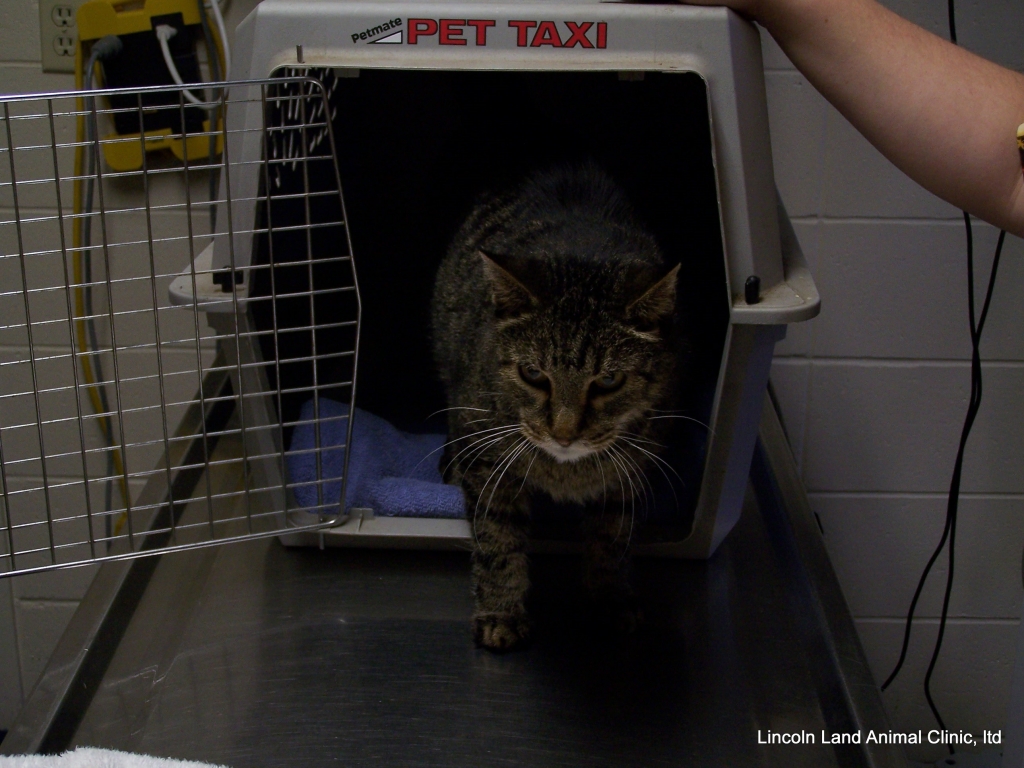
- The cat decides the rate of training. While going slow may be tedious, it will create a long lasting positive effect.
- It may be helpful to use longer lasting treats (such as canned food) when first implementing something new- door closing, lifting, etc. That way, the cat is distracted by the good food and there is a positive association. If the cat stops eating the food, it is a sign that the progression has gone too quickly.
- Rank treats/toys from high to low. The best treats are the ones the cat will do anything for and are used when introducing new steps. As the cat becomes more comfortable, gradually fade out high value for lower value treats.
- Using Feliway during the process can help the cat feel more comfortable. You can also use a Feliway diffuser in an outlet near the carrier. The diffusers will provide a constant supply of the pheromone.
- There are Feliway wipes to wipe the inside of the carrier prior to travel.
- Some cats may get car sick if they have eaten too much prior to getting into the car. For these cats, feeding prior to the getting into the car should be avoided (counter condition the other steps with the treats but do not feed prior to getting in the car). If it is vomiting related to anxiety, the positive association with the carrier should eliminate some, if not all, of the anxiety associated with the carrier. This in turn should decrease the vomiting as well as stress eliminations.
- This seems like a lot of work but the benefits are many fold.
- A calmer cat in the veterinary setting means better care and evaluations.
- Natural disasters such as house fires, tornadoes, hurricanes or any evacuation procedure will go a lot smoother if you are not fighting your cat to get into the carrier. The ability of the cat to go easily into the carrier could save its life and yours.
- Your cat has a safe place to retreat when company or small children are present.
- Traveling with your pet becomes a joy instead of a chore or worse a nightmare.
- Hopefully your cat will always be healthy and not require frequent trips to the veterinary hospital. If, however, they do get sick and need frequent exams, at least the carrier and car ride will not be stressful for them.
Please contact our office if you have any questions!
Watch the video entitled: A cat's perspective of the carrier. at the bottom of this link to see why your cat may be fearful of the carrier. After watching what adjustments will you make?
|
|











 Processing ....
 Email Us!